
Searching the Hoke County Court Docket
Start a Hoke County case search at the North Carolina eCourts Portal. Hoke County moved onto eCourts on October 14, 2024. Portal Smart Search is now the public entry point for the Hoke County court docket. Got the case number? Type it in. Without one, run a party name. Trim the results with the location, case-type, status, and filing-date filters. The Portal covers the whole state. So set the Hoke County location filter whenever a name is common.
Each result opens a Case Summary, sometimes called a Register of Actions. Think of it as the working Hoke County docket view. It is not a certified court record. Public case and assignment information, parties, Case Events, hearings, dispositions, and financial information can all appear there when applicable. Hold onto the case number. It links the online result to the clerk counter. The number also ties into a court calendar and any copy request you make later.
- Open Portal Smart Search and enter the case number or a party name.
- Apply the Hoke County location and a case type when the first result list is broad.
- Open the matching Case Summary and read Case Events in date order.
- Check the Hearings area or Portal Search Hearings for the current setting.
- Take the Hoke County case number to the clerk when an official document or certification is needed.
Hoke County eCourts Since 2024
Hoke County joined eCourts on October 14, 2024. The switch delivered Portal, eFiling, and Enterprise Justice across the county. Enterprise Justice is the Odyssey case-management system. The Judicial Branch documented the conversion. That explains why a Hoke County docket search now starts at one statewide public entry point rather than a Hoke-branded search site.
Older files deserve patience. A legacy case number may look nothing like the current Enterprise Justice number. No complete digital backfile date is set. When an older Hoke County matter fails to appear, hand the clerk the party name, the approximate year, the legacy number if known, and the document type. That works far better than treating an online gap as proof a file no longer exists.
The Judicial Branch's Hoke eCourts announcement records the local change. That change sits behind today's Portal access for Hoke County court records.
The official Hoke County courthouse page names the local court. It also names the clerk access point for Hoke County records.
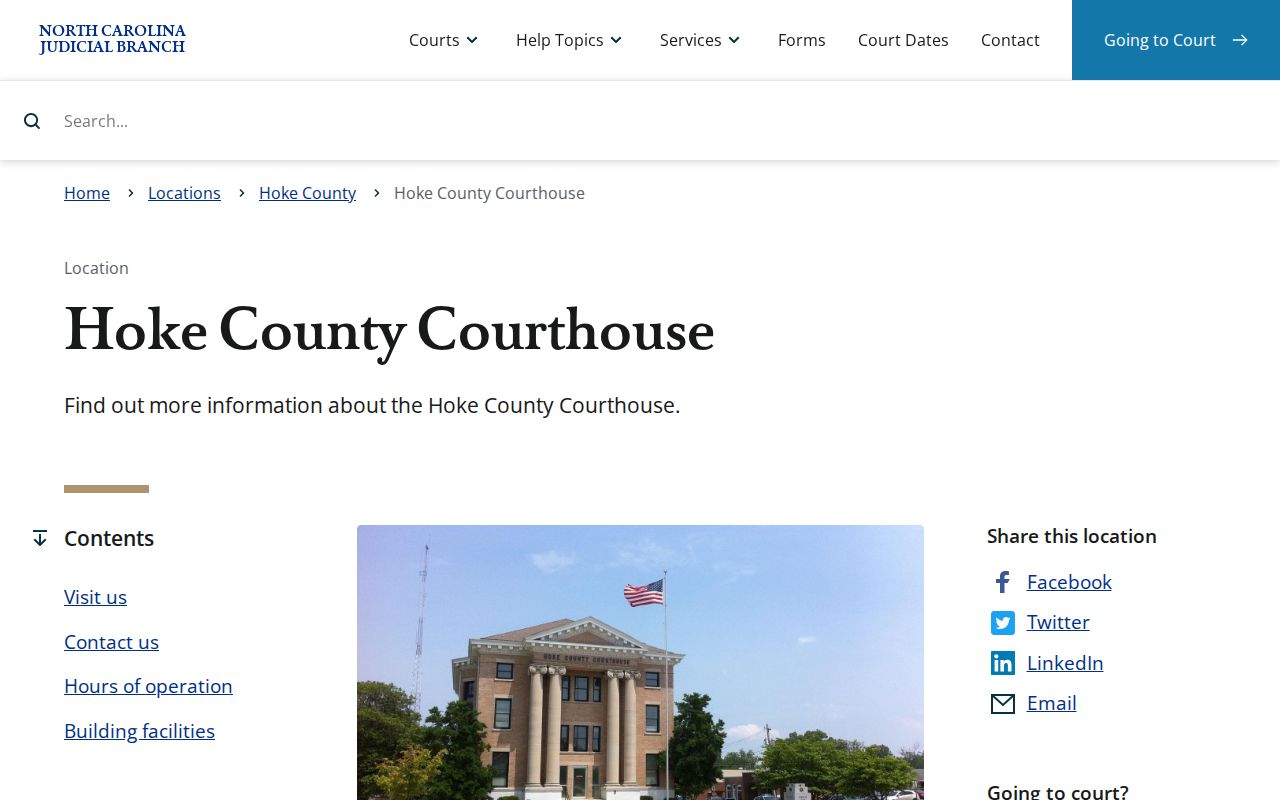
Need a file pulled, copied, or certified by the clerk? The Hoke County courthouse still handles that in person.
Inside a Hoke County Court Docket
A Hoke County Case Summary leads with identifying details. It then sorts the public record into categories. Read it in this order: case number, court or assignment, status. Then come the newest Case Events and the current Hearings and Dispositions areas. Older events add history. They may not describe what is set now. Civil, family, probate, and mental-health matters can also list a cause of action. That applies when public and applicable.
| Case number | Current Hoke County Enterprise Justice numbers end in -460; older numbers can differ. |
|---|---|
| Assignment | Public information connecting the Hoke County case to a court location, judicial officer, courtroom, or other assignment detail. |
| Parties | Public party information, subject to confidentiality and redaction rules. |
| Case Events | The chronological Register of Actions entries, such as a filing, notice, order, hearing, or disposition when shown. |
| Hearings | Current Hoke County location and time information to confirm with the clerk when needed. |
| Disposition | A recorded outcome or decisive status, not a substitute for a certified judgment. |
Hoke County Case Numbers End -460
Within a current Enterprise Justice number, the Hoke County identifier is 460. The statewide format runs two-digit year, then letters for case type. A six-digit sequence comes next. A three-digit county identifier ends the string. A number like 25CR000123-460 carries the Hoke County suffix. The real case type and sequence must come from a court notice or Portal result. Treat the suffix as a narrowing clue. Never use it to invent a case number.
Portal also allows limited wildcard searching. Per the Judicial Branch, a partial case number needs at least four characters plus an asterisk. A person-name wildcard needs at least three last-name characters with an asterisk. It also needs at least one first-name character with an asterisk. Old or incomplete number? The Hoke County Clerk of Superior Court can point you to the right public record channel.
- Case Summary
- The Portal’s public summary of a Hoke County case and its events.
- Register of Actions
- The court-record term for the chronological case register.
- Case Event
- A Portal label for a public action recorded in the case timeline.
- County code 460
- The Hoke County suffix used in current Enterprise Justice case numbers.
Hoke County Courts and Their Dockets
Hoke County sits inside the unified North Carolina General Court of Justice. One clerk system backs both Hoke County Superior Court and District Court records. But knowing the court level still helps you read a Hoke County docket correctly. Superior Court takes felony cases. It also hears higher-value ordinary civil matters. District Court handles most misdemeanors, traffic, and family matters. Civil matters within its statutory range land there too. Magistrates, part of the District Court structure, handle small claims and preliminary criminal functions.
| Court | Hoke County docket covers | Where to search |
|---|---|---|
| Superior Court | Felonies and ordinary civil actions above the proper-division threshold | Portal, Hoke County Clerk, and local Superior Court calendar material |
| District Court | Misdemeanors, traffic, family matters, and lower-value ordinary civil cases | Portal, Hoke County Clerk, and District Court schedules |
| Magistrate | Small claims and preliminary criminal functions | Hoke County Clerk and Portal public channels |
North Carolina’s court hierarchy confirms the point. Hoke County trial divisions belong to one statewide judicial system, not separate municipal and county court networks.
Court levels matter in Hoke County. Match your case type to the right calendar before you search a docket.
Hoke County Calendar Routes Compared
Hoke County court dates travel through three related channels. Portal's Hearings section and its Search Hearings tool give current case-specific detail. The Hoke County schedule hub ties together civil and criminal calendar routes. It also gathers District Court judge schedules. Superior Court terms add the broader session frame. Each route answers a different Hoke County question about a hearing or calendar.
A published civil or criminal calendar can prove the Hoke County court is sitting. A Case Summary shows whether one case carries a setting. A term is never a personal hearing notice. If Portal, a calendar, and a court notice disagree, let the latest Hoke County event plus direct clerk confirmation govern your next step. The full process sits under Hoke County court dates.
The official Hoke County schedule hub gathers those local calendar paths in one place.
Hoke County courthouse security guidance spells out the entry rules. Follow them when visiting the courthouse in person.
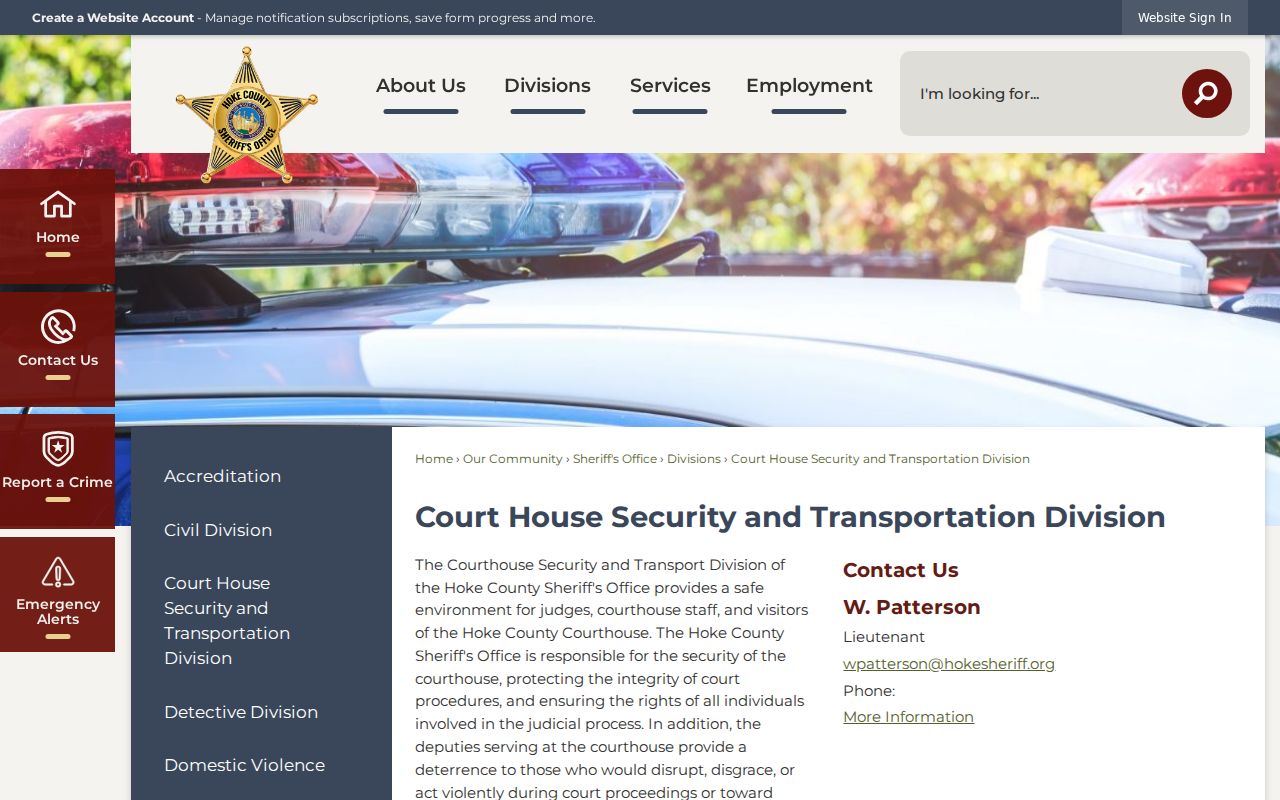
Because the courthouse is the Hoke County calendar fallback, check its current entry rules before going in person.
Finding Hoke County Court Dates
A Hoke County hearing search starts with the paper in hand. Pull the case number off your notice or citation. Then open the matching Case Summary and read the newest event. The Hearings area on that page shows what the docket lists next. Portal Search Hearings offers more angles: party name, business, attorney, judicial officer, courtroom, or the case number itself. The civil and criminal Hoke County calendars add session context. Neither offers a confirmed set of public filters for narrowing results.
Two calendar words trip people up. A continuance is just a postponement. A reset is shorthand for a replacement setting. Neither one promises the old date still holds. So treat every listed date as provisional until the court confirms it. The local rules connect to a District Court continuance policy, but there is no one-click online reset in Hoke County. A court date may be near. A Hoke County matter may seem to have moved, or a docket entry may read oddly. In those cases, call the Clerk at (910) 878-4100.
Hoke County Clerk Keeps One Record System
One clerk runs the whole record system in Hoke County. There is no separate civil clerk and criminal clerk here. Under N.C.G.S. § 7A-109, the clerk maintains the records, files, dockets, and indexes the court system requires, and the public may inspect them during regular hours unless a statute limits access. So the Clerk of Superior Court is the single counter for trial-court and magistrate-connected files.
Portal works well as a public index. It is not the official Hoke County record, though. For inspection, prepared copies, certification, questions about older files, or any document kept off the public internet, the clerk is the channel that counts. Registering free with Portal lets you save cases under My Cases, but it grants no entry to restricted Hoke County material. The official file still lives with the clerk.
Hoke County Clerk of Superior Court
304 N. Main St.
Raeford, NC 28376
(910) 878-4100
Hoke County Courthouse
Hoke County Portal and Official Files
A public Hoke County Case Summary and a certified document answer different questions. The summary helps you locate the case. It also helps you follow its public event history and spot a hearing on the court docket. A filed motion, order, or judgment sits somewhere else on that spectrum: public online, available only by clerk request, or restricted entirely. Only the Hoke County Clerk of Superior Court issues a certified copy.
Clerk copy fees follow N.C.G.S. § 7A-308. The first page of each document costs $2. Each additional page costs $0.25. A certificate under seal adds $3, and an exemplification, where one is needed, adds $10. Hoke County posts no flat docket-print fee and no online document price. Name the exact record you want and confirm the total charge before you order.
| Need | Best Hoke County route |
|---|---|
| Public case history | Portal Case Summary, then a clerk terminal if needed |
| Filed paper or image | Portal when public and available, otherwise Hoke County Clerk |
| Official or certified copy | Hoke County Clerk of Superior Court |
Hoke County Court Records Access
Openness has limits in Hoke County. North Carolina law generally lets the public inspect clerk records, yet a Portal account never unlocks sealed or confidential material. Juvenile records, unreturned criminal warrants, certain protective-order material, and personal identifiers all carry special restrictions. A missing Hoke County result can mean a search error, the wrong court, an older case number, a restriction, or an expunction. It does not prove the court record never existed.
Key Rules:
N.C.G.S. § 7A-109 requires clerks to maintain dockets and indexes and generally permits public inspection.
N.C.G.S. § 7A-308 sets core clerk copy and certificate fees.
N.C.G.S. § 132-1 describes public records but does not override court confidentiality rules.
Chapter 7B, Article 3 supplies special juvenile-record limits.
Hoke County Courthouse Record Visits
The Hoke County Courthouse sits at 304 N. Main St. It serves as the local record counter and public-terminal fallback. The Judicial Branch posts regular hours of 8:30 a.m. to 5:00 p.m. on weekdays. Its courthouse page and the public-access kiosk materials back Portal and public-record use. They promise neither free access to every Hoke County document nor download availability.
Security matters here. The Sheriff's information places the Hoke County public entrance on E. Edinborough Avenue. There, visitors pass screening. Listed restrictions cover cell phones, cameras without prior media approval, and recording devices. Arrive with a Hoke County case number and a clear document request instead of a plan to photograph a docket. That keeps an in-person Hoke County case lookup tight and sidesteps an avoidable entry problem.
Hoke County courthouse security guidance describes the current public entry rules in full.
Hoke County's official history adds the local background behind the courthouse and its records.
Hoke County formed in 1911, which matters for historical record research. No separate Hoke County court file can predate the county itself, so anything earlier lives under a different county's docket.
Hoke County Docket and PACER
PACER is the wrong tool for a Hoke County state case. Those cases live in Portal and with the Hoke County Clerk. Federal matters arising in the area are different. The U.S. District Court for the Middle District of North Carolina runs its docket through CM/ECF, with PACER as the remote public-access route. A federal number like 1:26-cv-00890 looks nothing like a Hoke County number ending in -460. That structural gap is your first clue.
Keeping the systems straight saves wasted searching. Portal is the state-court case route for Hoke County. PACER serves federal filings only. The Middle District of North Carolina posts federal court information. The Hoke County clerk holds the official state-court record.
Hoke County One-Courthouse Access
Hoke County keeps its docket geography simple. Census QuickFacts put the population at an estimated 56,939 in July 2025. The official court directory still lists one local courthouse. That single building serves the Clerk of Superior Court, Superior Court, District Court, magistrates, and related court contacts. Centralization does not make every Hoke County case identical. But it does mean one clerk counter whenever Portal needs an in-person fallback.
The local rule of thumb is easy. Match the Hoke County case type to its court level first. Then use the current case number to tie together Portal, a calendar, and the clerk's file. The county publishes no filing-volume figure. So treat any claimed caseload for Hoke County with doubt.
Hoke County Court Dockets by City
Raeford is the only incorporated city in Hoke County, per the county land-use plan. The 2020 Census put its population at 4,559. No municipal court exists there. The city has no separate docket calendar, clerk, or payment portal of its own. A traffic ticket, ordinance matter, small claim, felony, or civil suit filed in the Raeford area lands in the Hoke County state courts. Every case follows the same Portal and clerk routes.
Raeford Docket Search
4,559 people in the 2020 Census · Raeford cases route to Hoke County District Court, Superior Court, magistrates, and the Clerk of Superior Court.
The 2020 Census table for Raeford shows the population of the one incorporated city tied to Hoke County court records.
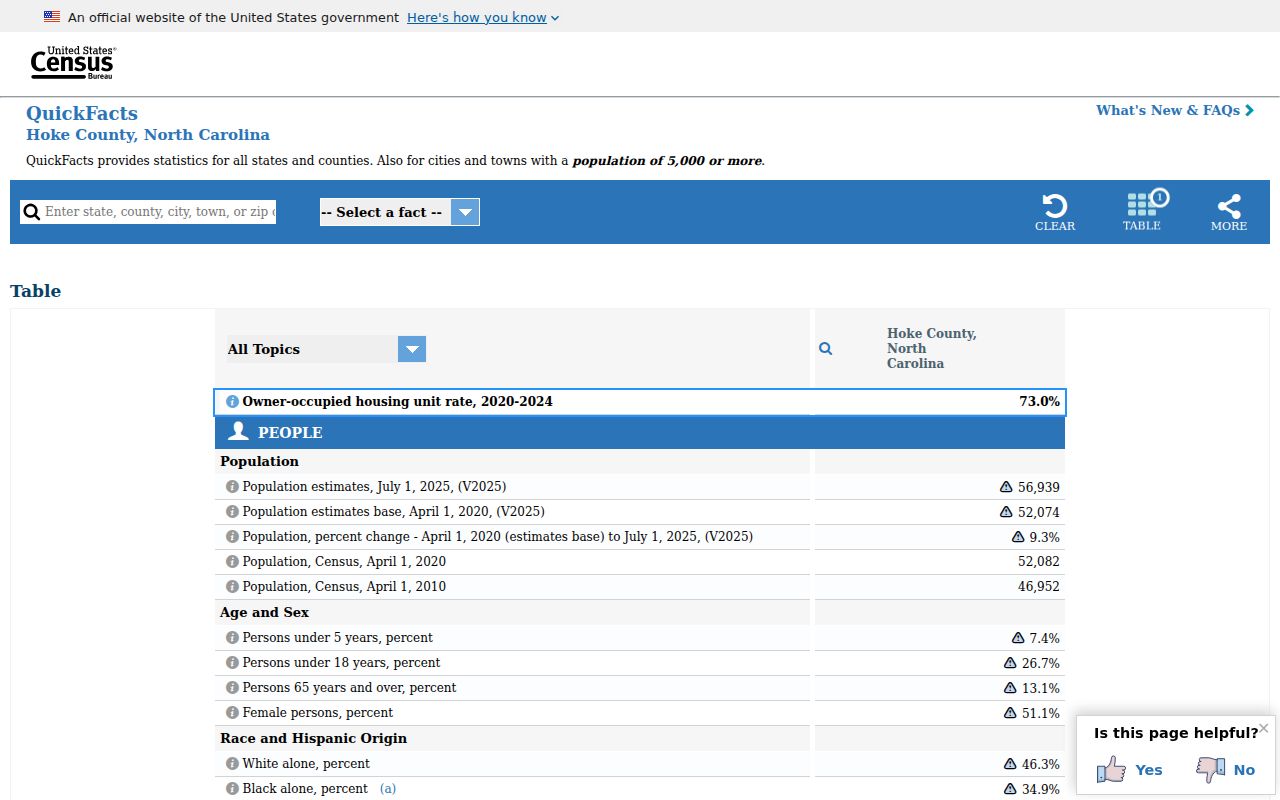
Hoke County keeps its docket system simple: one incorporated city and one county courthouse hold nearly everything.
Map and Directions to the Hoke County Courthouse
The Clerk, Superior Court, District Court, magistrates, and the cashier are all located at the Hoke County Courthouse, 304 N. Main St., in Raeford. There is no separate civil courthouse or justice center in the county; this one building is the access point for a Hoke case, whether a felony, misdemeanor or traffic file, civil filing, estate, or older paper record. Courthouse hours are Monday through Friday, 8:30 a.m. to 5:00 p.m.
Hoke County Courthouse
304 N. Main St.
Raeford, NC 28376
(910) 878-4100
Monday through Friday, 8:30 a.m. to 5:00 p.m.
The only public entrance is on E. Edinborough Avenue, where the Sheriff's Court House Security and Transportation Division screens visitors with a metal detector and/or hand-held detector and X-rays bags; cell phones, weapons, cameras, and recording devices are prohibited unless approved for media or evidence use. Street or adjacent-courthouse parking is available. The building has wheelchair access, an elevator, a baby-changing station, and vending machines; call security at (910) 624-1724 with entry questions.