
Getting Hoke County Court Records
One office runs the records for Hoke County. The Clerk of Superior Court keeps the files for Superior Court, District Court, criminal, civil, estate, and special-proceeding cases alike. The Hoke Judicial Branch page maps out the county court system.
For a Case Summary or Register of Actions, start with the public North Carolina eCourts Portal. It can identify a case. It also lists public events and hearings, and sometimes displays a public document. Keep in mind it is not the official court record. When you need to inspect a file, go to the clerk's counter. The same applies to a document that is not online, or a certified copy. You can call ahead too.
Hoke County Clerk of Superior Court
Hoke County Courthouse
304 N. Main St.
Raeford, NC 28376
Mail: PO Drawer 1569, Raeford, NC 28376
(910) 878-4100
Monday through Friday, 8:30 a.m. to 5 p.m.
The state's court-records information draws the line between what the public can reach online and what sits in the clerk's file.
Use that line when you ask for a Hoke court record. Name the case and the exact document or record type you want. A vague request for a docket packet just slows things down. The clerk's office does not publish official copy turnaround times or a mail, email, or fax copy-order form.
Hoke Case Summary Records
Three things get called a record. They are not the same. A Case Summary is the public, chronological index of case information and events. A filed document is a pleading, motion, order, or judgment image held in the case file, and it appears online only when it is public and provided there. A certified copy is the clerk's official copy or a certificate under seal.
Registering in Portal only saves cases in My Cases. It grants no wider access to a restricted Hoke court record.
| Record type | What it provides | Best Hoke route |
|---|---|---|
| Case Summary | Public case information, hearings, and Case Events in date order | eCourts Portal or clerk terminal |
| Filed document | A particular public pleading, order, motion, or judgment image | Portal if available, otherwise clerk file |
| Certified copy | Official clerk copy or certificate under seal | Hoke Clerk of Superior Court |
A result list is just a start. Open the public case and review its Case Events and Hearings. Then take the case number to the clerk when you need a specific filing, a full inspection, or an authenticated copy.
Court Record Types
Hoke court records span several kinds of matters. These include criminal actions, civil actions, special proceedings, estates, judgments, liens, and lis pendens. One clerk system does not change which court heard the matter. A felony may sit in Superior Court. A traffic, misdemeanor, family, or lower-value civil case usually starts in District Court. For both trial divisions, plus magistrate-connected files, the Hoke clerk remains the practical record counter.
Some public court material touches real property. A court record is still not the same as a land-record filing. A judgment, lien, or special proceeding may come through the Hoke clerk's court file. Deeds and many recorded instruments belong to the Register of Deeds. Ask which office holds the document before ordering a copy. That habit keeps an index entry from being mistaken for the underlying court document.
| Criminal action | Charges, court events, hearings, orders, and a disposition when public. |
|---|---|
| Civil action | Parties, claims, motions, orders, hearings, and judgment information. |
| Estate or special proceeding | Clerk-managed matters that may be public unless a confidentiality rule applies. |
| Judgment or lien entry | Court-indexed information that may point to a related filed record. |
Hoke Court Copy Charges
North Carolina's clerk-fee statute sets pieces, not one flat Hoke docket fee. A clerk-prepared plain copy runs $2 for the first page of each document. Each additional page costs $0.25. A certificate under seal is $3. An exemplification is $10. A transcript of judgment carries a $10 preparation and docketing fee. One request can combine several pieces. Confirm the total for the court record you want before you order.
| Clerk service | Statutory charge |
|---|---|
| Prepared copy, first page of each document | $2.00 |
| Each additional page | $0.25 |
| Certificate under seal | $3.00 |
| Exemplification | $10.00 |
The current North Carolina clerk-fee statute lists these copy and certificate amounts.
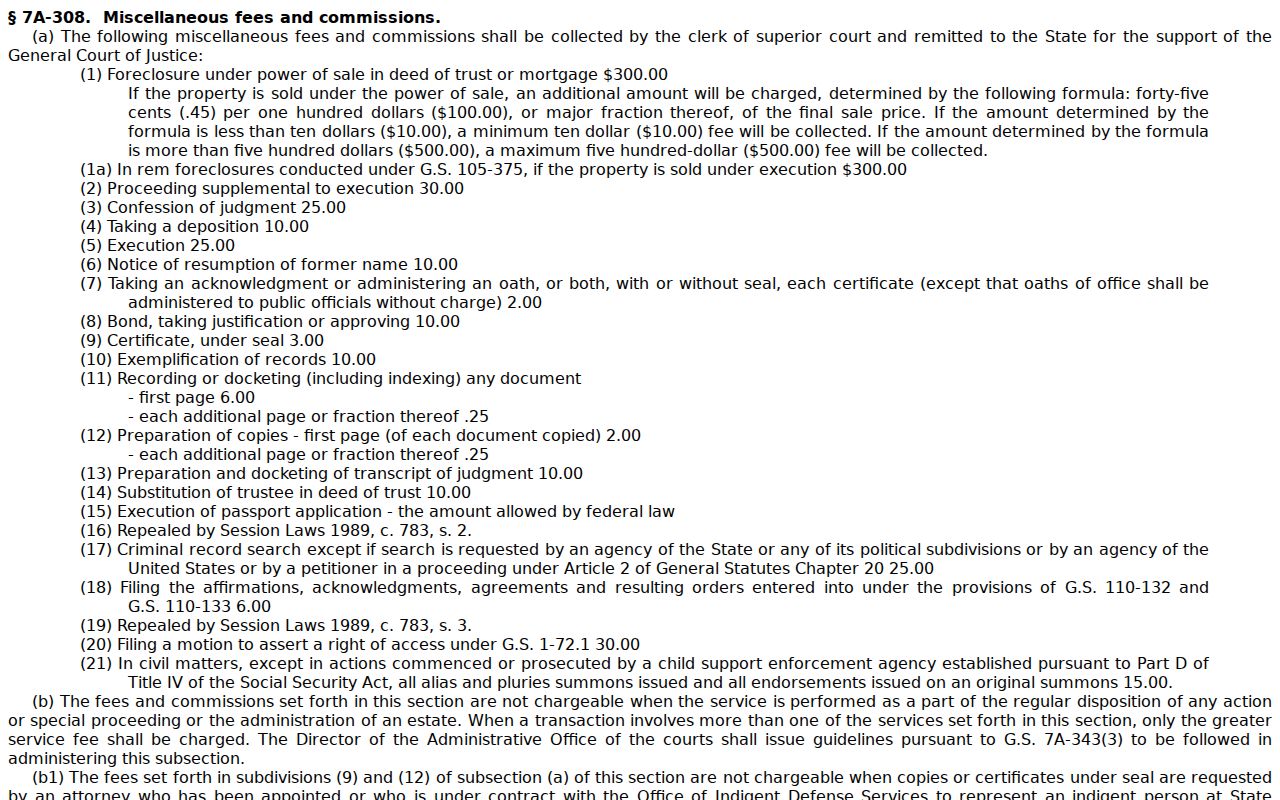
The statute sets no Hoke price for every Portal printout and no universal fee for an entire file. State exactly what you want in the request.
Inside a Hoke County Court Record
A public Case Summary can carry more than a case caption. Portal lists case information, assignment information, party information, causes of action, Case Events, dispositions, hearings, and financial information when applicable. What shows up depends on case type and access rules. A filed document answers a narrower question. It shows what a motion asked for or what an order decided. The clerk can confirm whether the public file holds that document.
| Case number | The identifier used by the clerk and Portal to locate the Hoke court record. |
|---|---|
| Case Events | Chronological public actions, which may include filing or hearing events. |
| Hearings | Scheduled settings and related public information; confirm changes with the clerk. |
| Disposition | The recorded outcome or status when the case and field are public. |
| Document image | A filed paper available only when public and made available through the access channel. |
Hoke Court File Terminals
A Hoke court record can be hard to review online. The public terminal and clerk counter matter. State guidance says clerk-office terminals can search criminal records by defendant name, case number, victim name, or witness name. They can also reach civil, estate, and special-proceeding information. The eCourts public-access kiosk opens Portal, File & Serve, and Guide & File, and it can print records or scan documents. None of that promises every document is downloadable or free.
The eCourts public-access kiosk guide details the services a clerk-office kiosk may offer.
Public entry to the Hoke courthouse is on E. Edinborough Avenue, and security screening applies to everyone. Cell phones and cameras sit on the posted prohibited list. Bring a paper case number, and leave any plan to photograph a Hoke court record at home.
Fees and Certified Copies
A certified copy is more than a printout from a website. When you contact the Hoke clerk, say exactly what you want: a plain prepared copy, a certificate under seal or certified copy, an exemplification, a Case Summary printout, or a chance to inspect the file. Details help. Give the case number, the county, and the court division if known. Include the document type and an approximate date. With that, the clerk can pull the right court record. The clerk can explain what access is available. The charge gets confirmed before any order is placed.
- Check Portal for the public Case Summary and write down the exact case number and document description.
- Contact or visit the Hoke Clerk of Superior Court and state whether the need is inspection, a plain copy, certification, or exemplification.
- Confirm the total charge and the clerk’s available method for the requested Hoke court record.
- Use the clerk file or on-site terminal if the public Portal record does not reach the needed document.
Use Portal to find the file; rely on the clerk for the official copy. The Hoke clerk offers no standard mail-order form, email, or fax route for case-file copies, so plan on working through the office directly.
Hoke Court Documents Missing
Just because a document is missing online does not mean no Hoke court record exists. The file may be nonpublic. It may lack an image. Or it may sit in a legacy file that the 2024 eCourts conversion left needing clerk help. Give the clerk a legacy number if you have one. Add the party name and the approximate year. State the type of document you want. The clerk can then say whether an on-site or archived record can be inspected or copied. Assume no dated cutoff for digital access, because Hoke has published no official backfile date. Federal cases run through an entirely separate route. Hoke state cases never show up in PACER or the federal CM/ECF system. A case in the Middle District of North Carolina uses PACER and CM/ECF. The Hoke Clerk keeps the county state-court file instead. The Middle District CM/ECF information page describes that separate federal docket system.
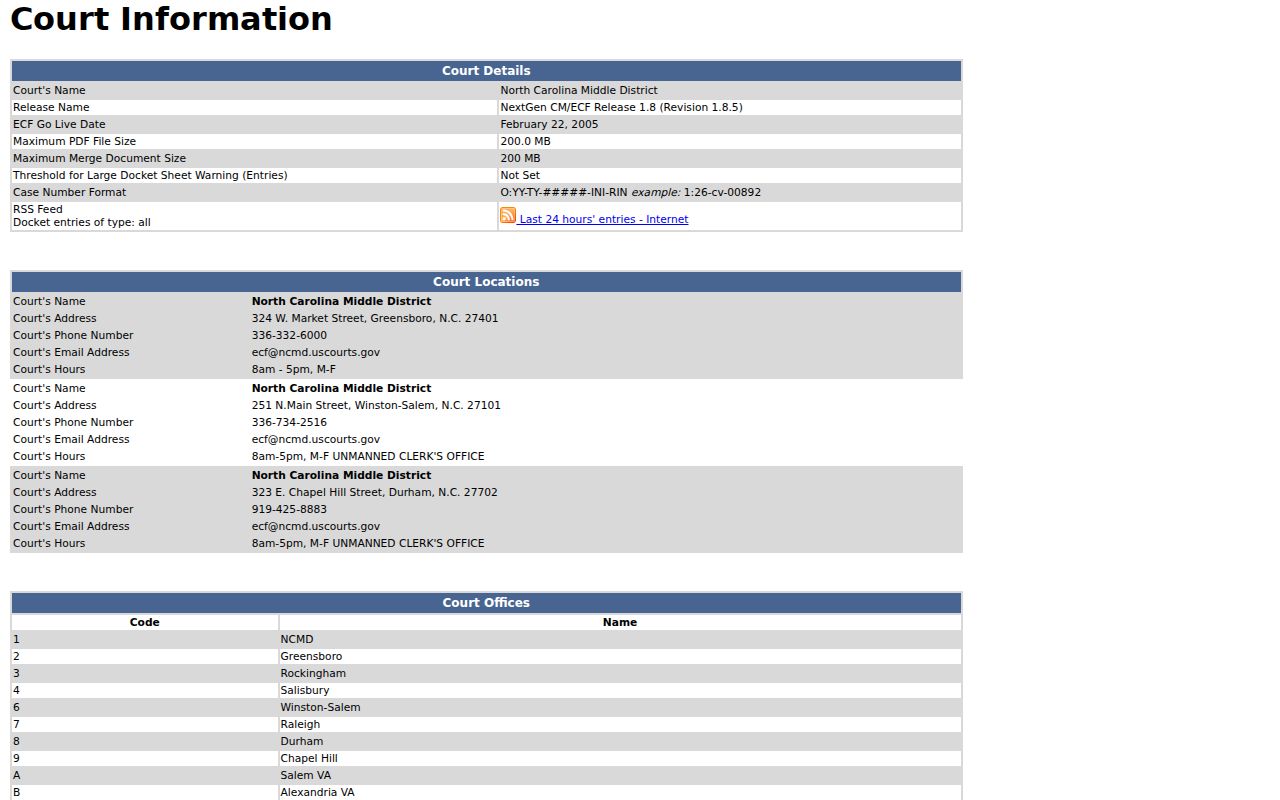
That federal screen is a contrast, not a route for a Hoke state-court search. For a state case, go back to Portal or the Hoke clerk. The Middle District Bankruptcy Court case-information page likewise points federal bankruptcy users to its own distinct system.
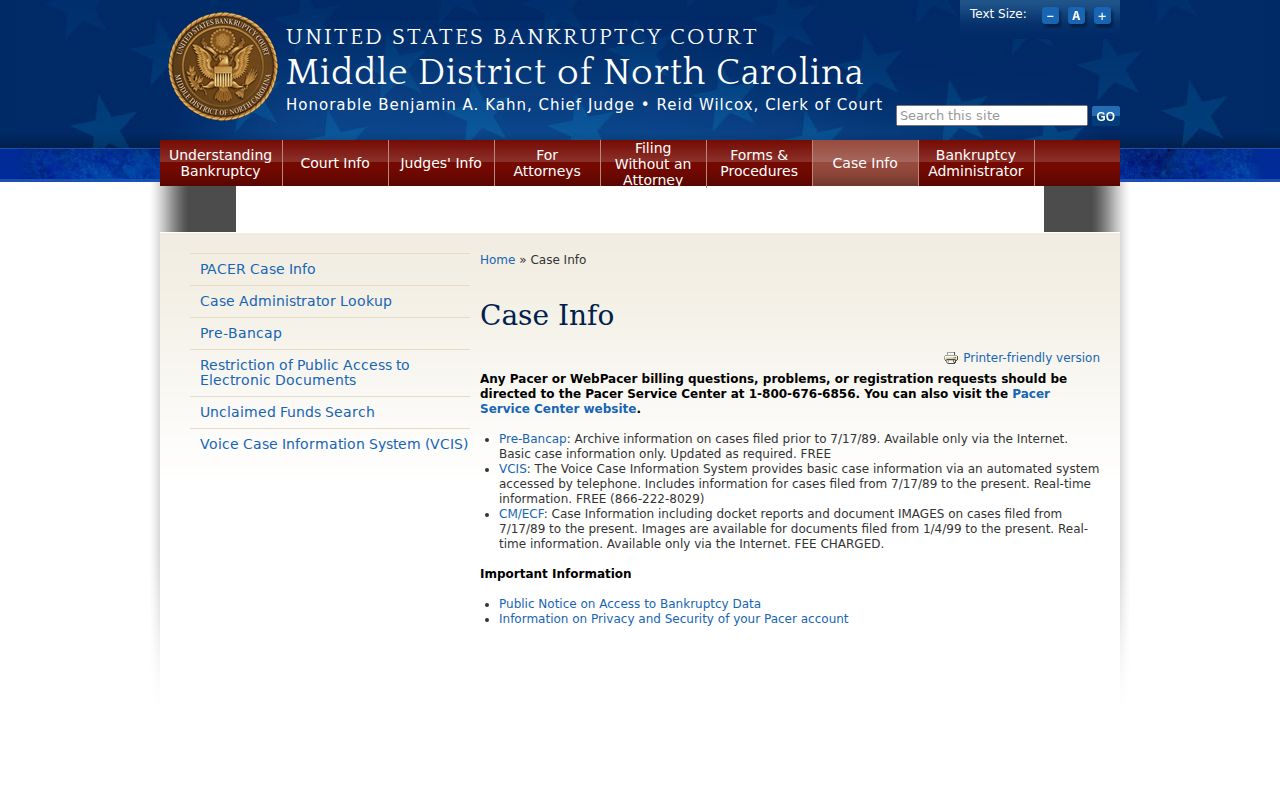
A bankruptcy filing belongs with the federal bankruptcy court. The Hoke court-record counter does not hold it, even when a party lives in Hoke County. The PACER fee explanation lays out federal docket charges, including a $0.10-per-page rate, a $3 cap for a document or case-specific report, and the quarterly waiver threshold.
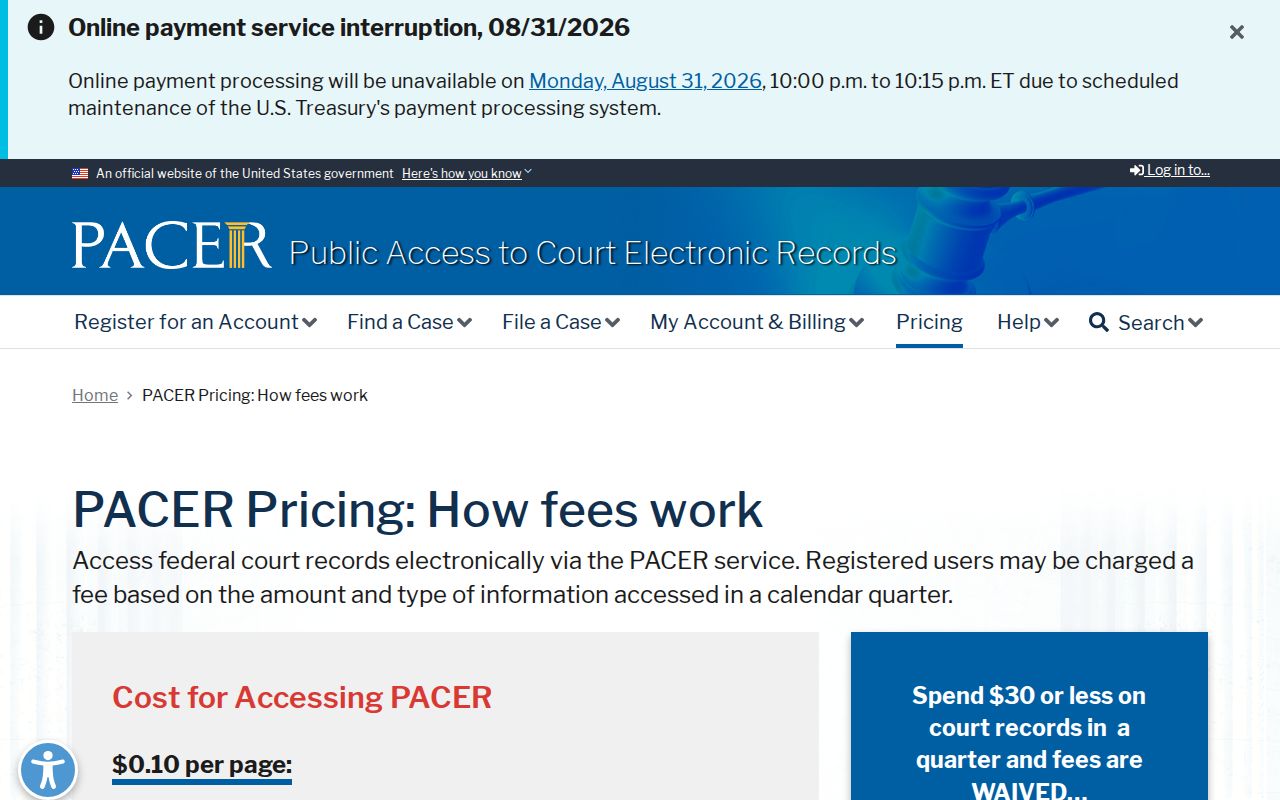
Those federal rules do not set Hoke clerk-copy charges. Do not use them to estimate the cost of a state court record.
Sealed Records and Public Access
North Carolina opens clerk-maintained records to public inspection during regular office hours. A law can say otherwise. Even so, not every Hoke court record is public. Juvenile material, sealed cases or documents, confidential filings, unreturned warrants, protective material, and personal identifiers can all be limited. A Portal account does not bypass those limits. A clerk simply cannot hand over a record that law or court order restricts.
Public-access rule: N.C.G.S. § 7A-109 directs clerks to maintain specified records and generally makes them open to inspection. N.C.G.S. § 7A-308 supplies the copy and certificate fee framework. Neither statute removes a specific confidentiality or sealing rule.
The Judicial Branch administrative public-record request process is no substitute for a Hoke clerk-file request. For a court case, start with the public Case Summary and the clerk who keeps the originating file.
Hoke Court Copy Requests
A focused request helps. It gives the clerk a fair chance to locate the right Hoke court record. Bring the case number if you have it. Bring the parties' names, the approximate filing or order date, and the exact item sought. Say plainly what output you want. Options include a plain copy, certified copy, certificate under seal, exemplification, Case Summary, or file inspection. Those labels matter. Each triggers different access checks and may carry different statutory charges. Transcripts take special care. A transcript is not an ordinary docket entry the clerk hands over like an order. An official court reporter creates the verbatim record and sets the rate for a non-appeal transcript. When a recording exists, public-case audio goes through Form AOC-G-114. Confidential audio needs court permission through AOC-G-115. Criminal District Court proceedings are generally not recorded unless a rule says otherwise. Ask the clerk which route applies before chasing a transcript or audio record. Note: Keep a Hoke court copy request case-specific. No promised processing time or universal delivery method applies across the board.